
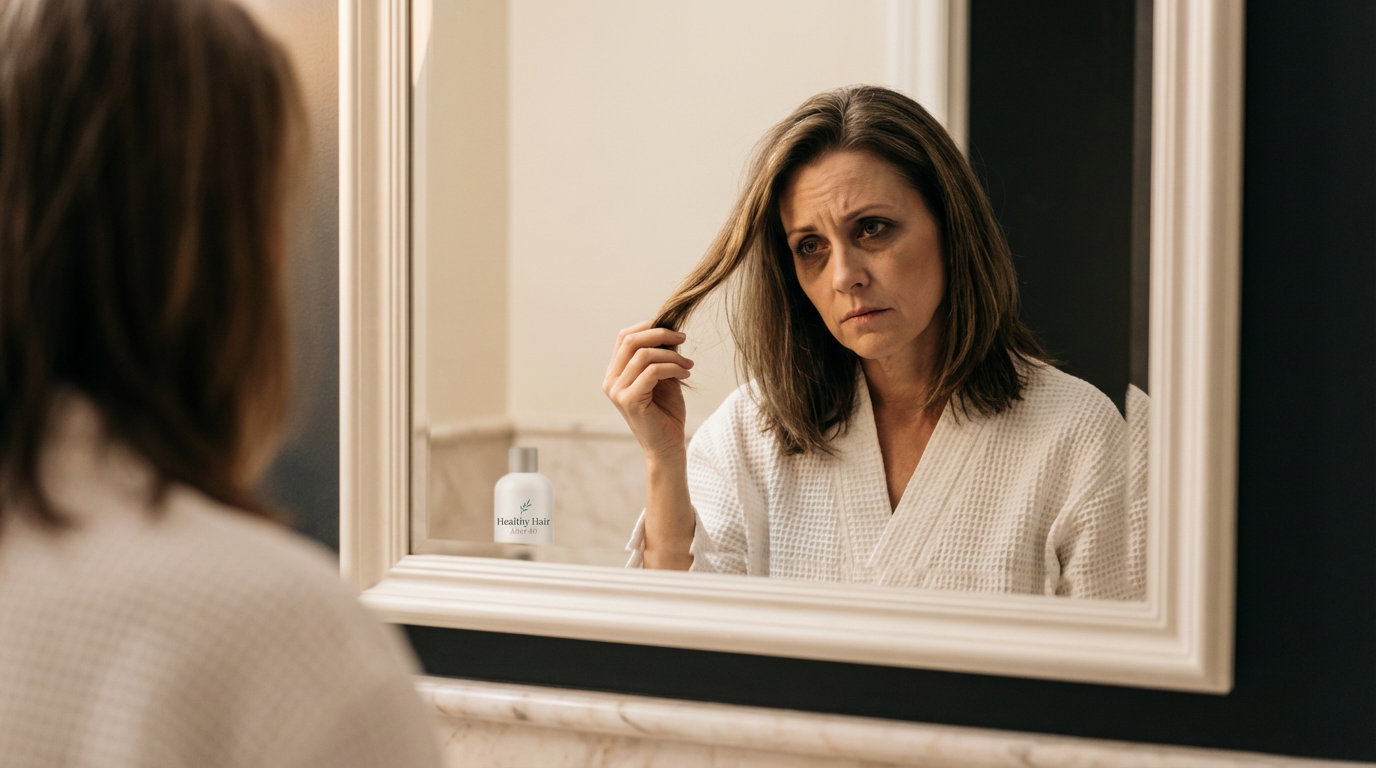
Perimenopause hair loss is one of the most frustrating — and least talked about — changes women experience during midlife. If you’ve noticed more hair in your brush, a widening part, or thinning around your temples, you are not alone.
In this guide, we break down exactly why perimenopause causes hair loss, and more importantly, which treatments and products actually work.
What Is Perimenopause Hair Loss?
Perimenopause is the transition phase before menopause, typically beginning in a woman’s 40s. During this time, estrogen and progesterone levels fluctuate significantly — and hair follicles are highly sensitive to these hormonal shifts.
As estrogen declines, hair spends less time in the growth phase and more time in the shedding phase. The result is noticeable thinning, reduced volume, and slower regrowth.
This type of hair loss — known as female pattern hair loss or androgenetic alopecia — affects up to 40% of women by age 50, according to the American Academy of Dermatology
Why Menopause and Hair Loss Go Hand in Hand
The connection between menopause and hair loss comes down to three key hormonal changes:
1. Falling Estrogen Levels
Estrogen supports hair follicles and extends the growth phase of the hair cycle. When estrogen drops, hair growth slows and shedding increases noticeably.
2. Rising Androgen Activity
As estrogen falls, androgens (male hormones) become relatively stronger. These androgens can shrink hair follicles over time, leading to finer, shorter strands — a process called follicular miniaturisation.
3. Increased Cortisol (Stress Hormone)
Perimenopause often comes with sleep disruption, mood changes, and increased stress — all of which raise cortisol levels. High cortisol pushes hair follicles into the shedding phase prematurely, a condition known as telogen effluvium.
5 Best Treatments for Perimenopause Hair Loss
Managing thinning hair during menopause requires a multi-angle approach. Here are the five most effective treatments backed by research:
1. Hair Growth Supplements
Nutritional deficiencies are extremely common during perimenopause and directly impact hair health. Key nutrients to look for:
- Biotin — supports keratin production and hair structure
- Iron — low iron is one of the top causes of hair shedding in women
- Vitamin D — deficiency is linked to disrupted hair follicle cycling
- Zinc — supports tissue growth and follicle repair
- Collagen — provides essential amino acids for hair structure
Top Recommended Supplements:
- 🌿 Nutrafol Women’s Balance — specifically formulated for perimenopause and menopause. Targets cortisol, DHT, and nutrient deficiencies simultaneously.
- 🌿 Viviscal Women’s Hair Growth — clinically studied marine complex with strong evidence for reducing shedding and improving density.
- 🌿 Ritual Essential for Women 50+ — covers vitamin D, iron, and omega-3 in one clean daily supplement.
2. Scalp Care and Stimulation
A healthy scalp is the foundation for healthy hair. During perimenopause, scalp circulation can decrease — limiting the nutrients that reach hair follicles.
- Daily scalp massage — even 4 minutes per day has been shown in studies to increase hair thickness over 24 weeks
- Rosemary oil — research published in Skinmed Journal found rosemary oil as effective as minoxidil for hair regrowth with fewer side effects
- Caffeine-based shampoos — stimulate follicles and extend the hair growth phase
Top Recommended Products:
- 🧴 PURA D’OR Anti-Thinning Shampoo — biotin-enriched, sulfate-free, widely recommended for menopausal hair loss.
- 🧴 Rosemary Scalp Growth Serum — apply directly to scalp before sleep for best results.
3. DHT-Blocking Treatments
DHT (dihydrotestosterone) is the androgen most responsible for shrinking hair follicles during perimenopause. Blocking or reducing DHT is one of the most targeted approaches for perimenopause hair loss treatment.
- Saw Palmetto — natural DHT blocker with growing clinical support
- Ketoconazole shampoo — reduces scalp DHT activity with regular use
- Pumpkin seed oil — emerging research suggests meaningful DHT-blocking properties
4. Hormonal Balance Support (Natural)
While HRT is a medical decision for your doctor, these natural approaches support hormonal balance during menopause:
- Ashwagandha — adaptogen that lowers cortisol and supports hormonal balance
- Maca root — supports estrogen balance during perimenopause
- Flaxseed — contains lignans that support healthy estrogen metabolism
5. Diet and Lifestyle Changes
No supplement will overcome a poor diet. These food-based strategies directly support hair health during menopause:
- 🥗 Increase protein — aim for 1.2–1.6g per kg of body weight daily
- 🥬 Eat iron-rich foods — lentils, spinach, grass-fed beef, pumpkin seeds
- 🥑 Add healthy fats — avocado, olive oil, and salmon support scalp health
- 🚫 Reduce sugar — excess sugar spikes insulin and worsens androgen activity
- 💧 Stay hydrated — dehydration weakens hair structure from the inside out
Best Products for Menopausal Hair Loss — Quick Comparison
| Product | Type | Best For | Price |
|---|---|---|---|
| Nutrafol Women’s Balance | Supplement | Full hormone + hair support | $$$ |
| Viviscal Women’s | Supplement | Reducing shedding | $$ |
| PURA D’OR Shampoo | Topical | Daily strengthening | $ |
| Rosemary Scalp Serum | Topical | Follicle stimulation | $ |
| Saw Palmetto | Supplement | DHT blocking | $ |
When to See a Doctor About Perimenopause Hair Loss
If your perimenopause hair loss is sudden, severe, or accompanied by fatigue, weight changes, or skin dryness, speak with your healthcare provider as soon as possible. Conditions like thyroid disorders, anemia, or autoimmune alopecia can mimic hormonal hair loss and require specific medical treatment.
The Bottom Line
Perimenopause hair loss is common, manageable, and in many cases reversible with the right approach. The key is addressing it from multiple angles — nutrition, scalp health, hormonal balance, and consistent daily habits.
Start with a quality supplement, clean up your scalp routine, and give it at least 90 days. Hair growth is slow — but steady, consistent effort absolutely makes a difference.
If you’re navigating hair changes right now, know that you’re not alone — and that small, consistent habits can make a meaningful difference over time.
Affiliate Disclosure: This post contains affiliate links. We may earn a small commission at no additional cost to you.
Sarah Mitchell has spent 10+ years researching
women’s hormonal health and hair wellness. She
created Healthy Hair After 40 to help women
navigate midlife hair changes with confidence
and clarity