Hair thinning after 50 is more common than many women realize. In fact, hormonal changes, scalp health, nutrition, and stress all play a role in how your hair looks and feels as you age. If you have noticed more shedding, reduced volume, or a widening part, you are not alone — and there are practical steps you can take.
Let’s break down what really causes hair thinning after 50 and what actually helps.
For more science-backed hair wellness tips for women over 40, visit our homepage at Healthy Hair After 40.
1. Hormonal Changes and Hair Thinning After 50
One of the biggest reasons for hair thinning after 50 is hormonal change. During perimenopause and menopause, estrogen levels decline. Estrogen helps keep hair in the growth phase longer. When levels drop, hair may shed faster and grow back thinner.
Additionally, lower estrogen can allow androgens (male hormones) to have a stronger effect on hair follicles. This can gradually shrink follicles, leading to finer strands.
According to the National Institutes of Health (NIH), hormonal fluctuations significantly affect the hair growth cycle and follicle health.
This is why many women notice hair thinning after 50 around the crown or part line rather than complete bald patches.
2. Nutritional Deficiencies That Worsen Hair Thinning After 50
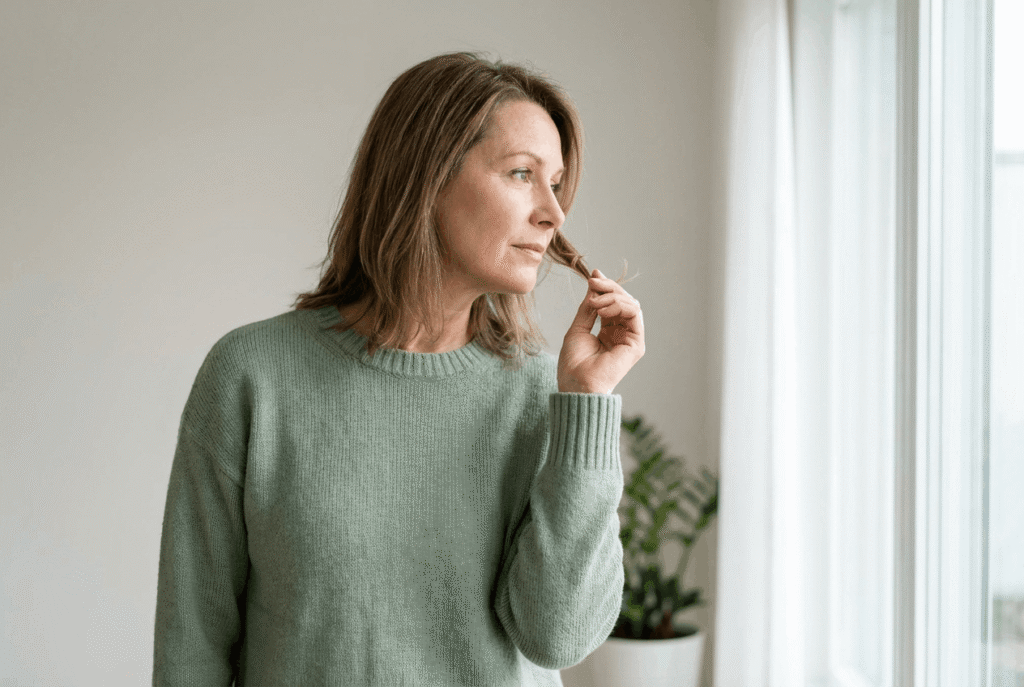
As we age, our body absorbs nutrients less efficiently. Iron, protein, zinc, vitamin D, and biotin are all essential for strong hair growth.
Low iron levels, in particular, are strongly linked to hair shedding in women. If your diet lacks adequate protein, your body may prioritize vital organs over hair production.
Harvard Health explains that nutritional deficiencies can directly impact hair structure and growth patterns.
Eating a balanced diet with leafy greens, healthy fats, quality protein, and whole grains can support hair strength from within.
3. Scalp Health and Circulation
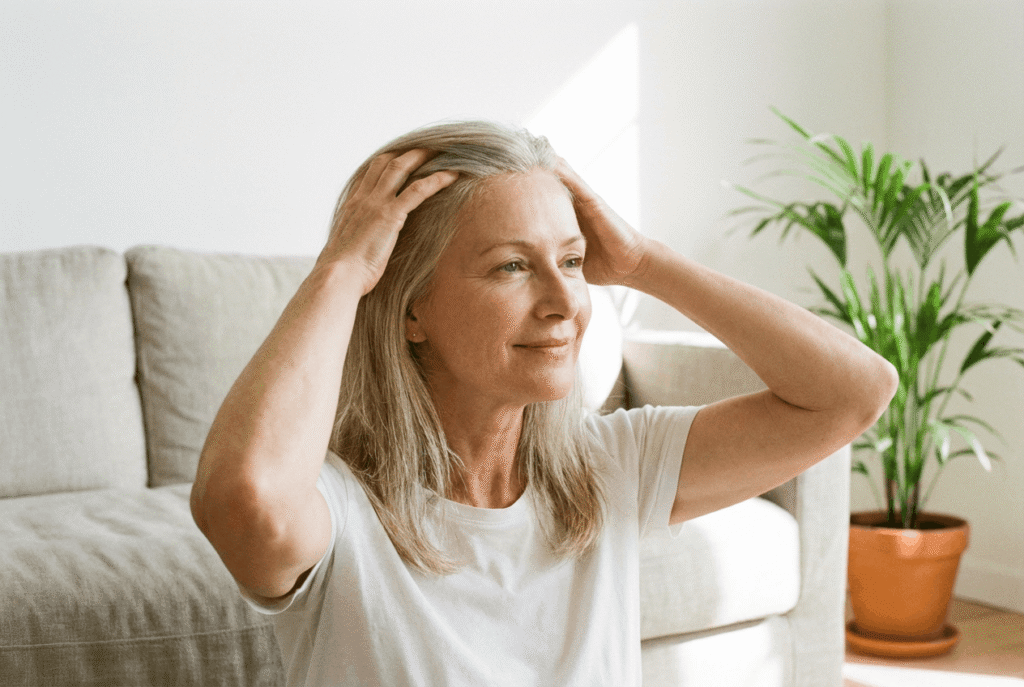
Healthy hair starts with a healthy scalp. Poor circulation, inflammation, product buildup, and dryness can weaken follicles over time.
Hair thinning after 50 can worsen if the scalp is not properly cared for. Gentle scalp massage, mild shampoos, and avoiding harsh chemical treatments can make a noticeable difference.
Improving blood flow to the scalp helps deliver nutrients directly to the hair root. Even simple habits like regular brushing and scalp massage may help support healthier growth.
4. Stress and Hair Thinning After 50
Nutrient absorption can change with age.
Chronic stress raises cortisol levels, which can push hair into the shedding phase. This condition, known as telogen effluvium, often becomes more noticeable during midlife.
Women experiencing menopause may also face increased stress due to sleep disruption, mood changes, or life transitions. All of these can contribute to hair thinning after 50.
Managing stress through exercise, meditation, proper sleep, and relaxation techniques can support overall hair health.
5. What You Can Do About Hair Thinning After 50
The good news is that hair thinning after 50 is manageable in many cases.
Here are supportive steps:
- Maintain a nutrient-rich diet
- Check iron and vitamin D levels with your doctor
- Use gentle, sulfate-free shampoos
- Avoid excessive heat styling
- Massage your scalp regularly
- Manage stress effectively
- Consider speaking with a healthcare provider about hormone changes
Consistency matters. Small improvements over time can lead to noticeable results.
What Actually Supports Healthier Hair After 50

When to Speak With a Professional
If hair thinning after 50 is sudden, severe, or accompanied by other symptoms like fatigue or weight changes, consult a healthcare professional. Underlying conditions such as thyroid disorders or anemia can contribute to excessive shedding.
The Bottom Line
Hair thinning after 50 is incredibly common — but it doesn’t mean you’ve done anything wrong.
Hormonal shifts, scalp changes, nutrition, and lifestyle factors all influence how hair behaves during midlife.
By understanding these changes and taking supportive steps, many women can maintain healthier-looking, fuller-feeling hair well into their 50s and beyond.
If you’re navigating hair changes right now, know that you’re not alone — and that small, consistent habits can make a meaningful difference over time.

Sarah Mitchell has spent 10+ years researching
women’s hormonal health and hair wellness. She
created Healthy Hair After 40 to help women
navigate midlife hair changes with confidence
and clarity